Second Number vs Burner Number: What Is the Difference?
Second numbers and burner numbers sound similar, but they are designed for different types of use.

Second Number vs Burner Number: What Is the Difference?
The terms “second number” and “burner number” are often used as though they mean the same thing. Both give you another number to use instead of your main mobile line, but the intended use is different.
A second number is normally kept for regular or long-term communication. A burner number is usually temporary and used for a limited situation before being discarded.
What Is a Second Number?
A second number is an additional line that you manage alongside your main number. It may be used for work, customers, travel, online selling, privacy or communication with a particular country.
Because it is intended for ongoing use, people may save it, return calls to it and recognise it as your business or alternative contact number. It can also support features such as voicemail, call forwarding, menus and an AI receptionist.
What Is a Burner Number?
A burner number is usually obtained for a short period or a single purpose. Someone might use one while selling an item, arranging a delivery, testing a campaign or communicating with a person they do not yet know well.
The defining feature is not secrecy. It is disposability. The user expects to stop using the number when the task is finished.
The Main Differences
Length of use: second numbers are normally retained; burner numbers are temporary.
Identity: a second number may become associated with you or your business; a burner number is less likely to be widely published.
Features: second numbers often benefit from voicemail, routing and call management; a temporary number may only need basic calls or messages.
Continuity: contacts can reliably call a retained second number; a discarded burner number may later be unavailable or reassigned.
Purpose: second numbers organise communication; burner numbers limit exposure during a specific situation.
Which One Is Better for Business?
A stable second number is almost always better for a business. Customers need a number they can save and call again. Changing numbers can cause missed enquiries, reduce trust and make printed materials obsolete.
Even a one-person business benefits from keeping the same public number while changing how calls are handled behind it.
Which One Is Better for Privacy?
That depends on the situation. A retained second number protects your main line while remaining convenient for trusted contacts. A temporary number can reduce long-term exposure when communicating for a short-lived purpose.
Privacy also depends on how you use the number. Avoid publishing unnecessary personal information, check messaging-profile settings and do not use a temporary line as the only recovery method for an important account.
Can Either Type Receive Verification Codes?
Some numbers support SMS, but acceptance of verification codes is controlled by the app or website sending them. Certain services reject virtual, shared or previously used numbers. Always check compatibility and keep a reliable recovery method for important accounts.
How SimBuster Fits In
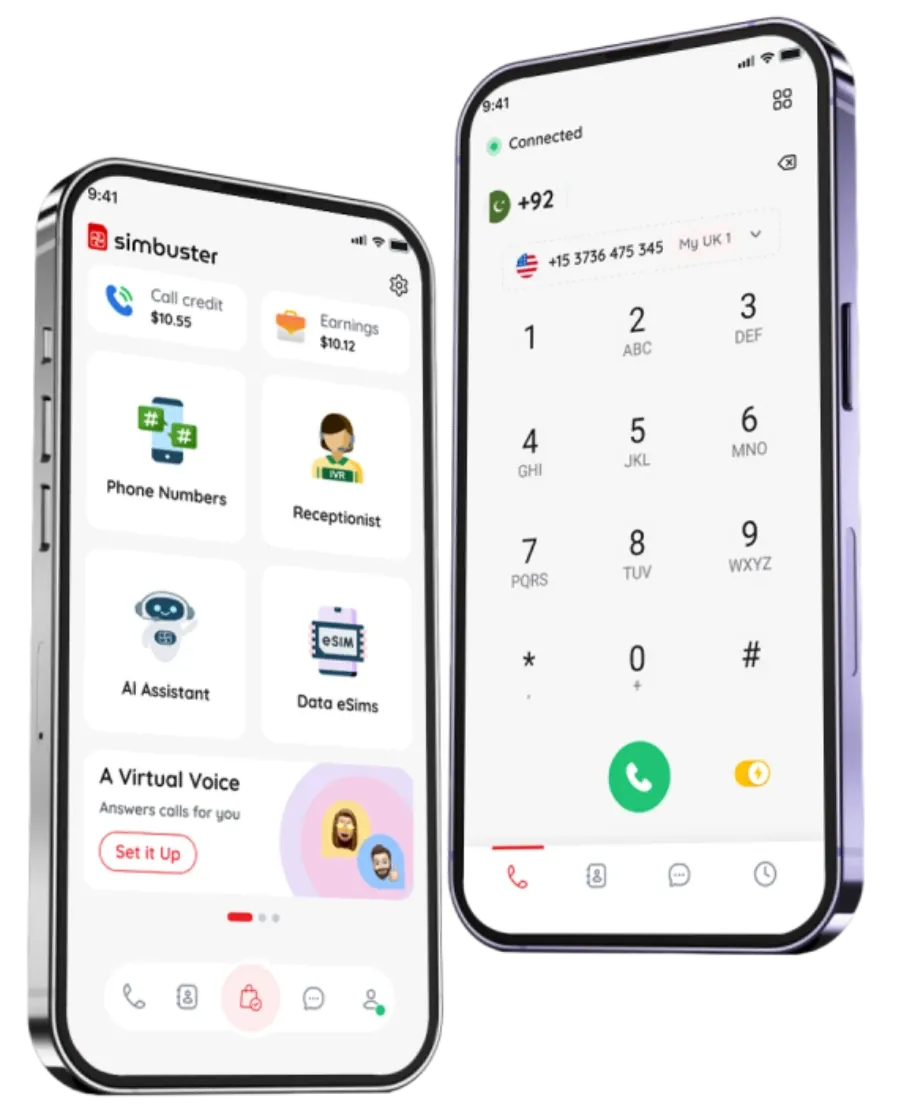
SimBuster provides second numbers that can be used for ongoing personal or business communication. Availability, documentation, voice and SMS support vary by country and number type. You can also add call handling features that would not normally be associated with a basic temporary number.
Choose a Number That Fits the Purpose.
Explore SimBuster numbers and check the features available before you buy.
Travel smart. Stay connected.
Get your eSIM in seconds and enjoy SIM-less internet wherever you are.