Travel eSIM vs International Roaming: Which Is Better?
Compare two simple ways to stay online abroad and choose the one that fits your trip.

How International Roaming Works
International roaming and travel eSIMs both let you use mobile data abroad, but they work differently. Roaming extends your existing mobile plan into another country. A travel eSIM adds a separate data plan for the destination or region.
The better option depends on your network, trip length, destination, device and how much data you expect to use.
When roaming is enabled, your home mobile provider connects your SIM to a partner network abroad. Calls, messages and data continue through your normal account and number.
This is convenient because no installation is required. However, charges and allowances vary widely. Some plans include selected countries, while others charge a daily fee or expensive pay-as-you-go rates.
How a Travel eSIM Works
A travel eSIM is installed as another mobile plan. At the destination, you select it for cellular data. Your home SIM can remain active for your normal number, but the travel eSIM handles internet access.
Cost
A travel eSIM can be more predictable because you purchase a defined amount of data for a stated period. Roaming may be equally good when your normal plan already includes the destination. Always compare the full price rather than assuming one method is automatically cheaper.
Convenience
Roaming is the easiest when it is included: arrive, switch on the phone and connect. An eSIM takes a few minutes to buy and install, but it can be prepared before departure and avoids finding a physical SIM shop.
Keeping Your Number
Roaming keeps calls, texts and data on your usual line. A travel eSIM is often data-only. On a dual-SIM phone, you can keep the home line active for calls and messages while using the eSIM for data.
Coverage and Speed
Both options rely on local networks. Coverage depends on which networks the provider uses in that country and where you travel within it. A plan that works well in a capital city may have weaker coverage in rural areas.
Which Is Better for a Short Trip?
For a short trip with roaming already included, using the home plan may be simplest. If roaming carries a daily fee, a small eSIM package may offer better value.
Which Is Better for Longer or Multi-Country Travel?
Regional eSIMs can be useful when visiting several countries because one plan may work across the route. Check every destination, network list, validity period and data allowance before buying.
A Practical Combination
Many travellers use both: the home SIM remains available for important calls and texts, while the eSIM provides data. Internet-based calls and messages then use the eSIM connection.
Choose With SimBuster
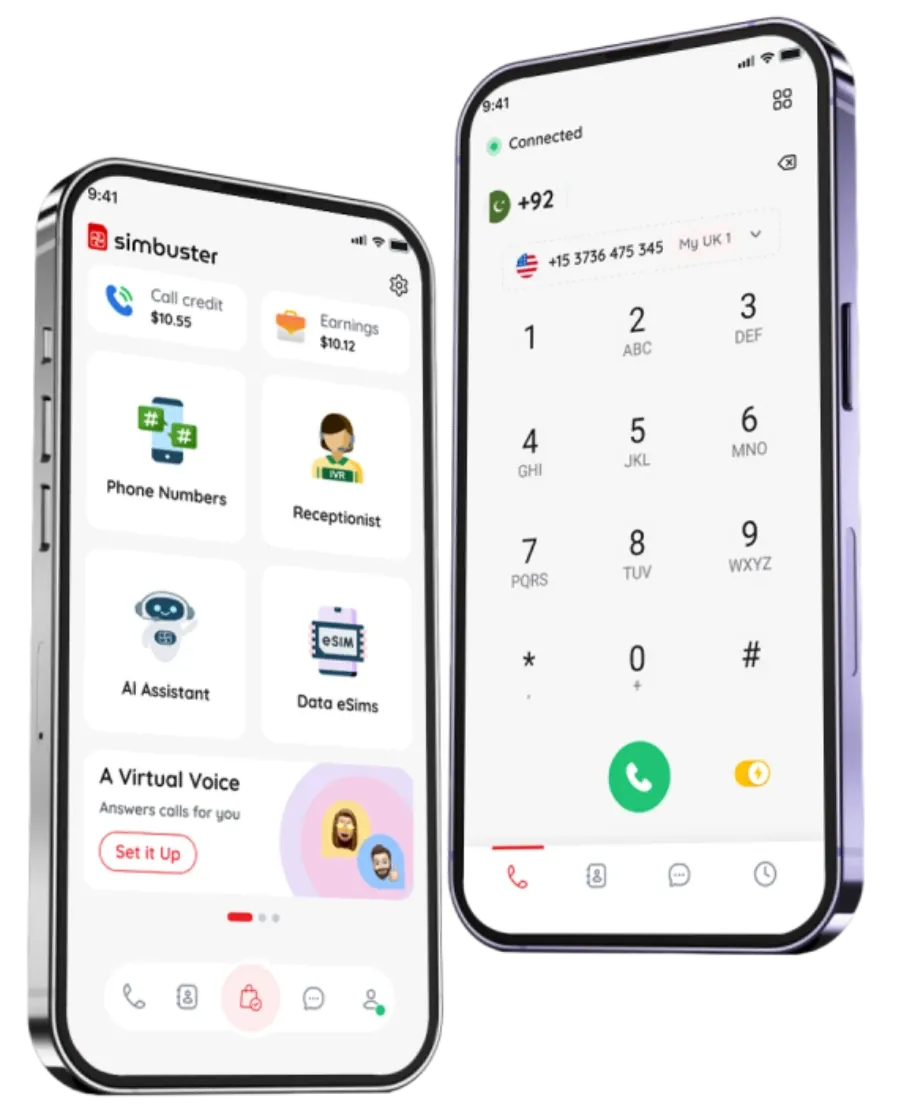
SimBuster lets you compare available travel eSIM plans by destination and data allowance. You can also add a separate phone number or use international calling features, giving you more than one way to stay connected.
Skip the Roaming Surprise.
Check SimBuster eSIM plans for your destination before you travel.
Travel smart. Stay connected.
Get your eSIM in seconds and enjoy SIM-less internet wherever you are.